



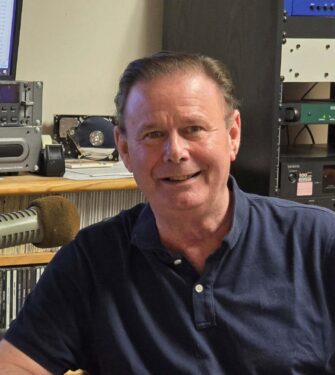


(The Center Square) – Automated license plate readers, also known as Flock cameras, have no place in Tennessee’s Knox County, Mayor Glenn Jacobs said Monday.
Jacobs and Knox County Commissioner Adam Thompson said in a joint statement that they have concerns about the devices. The county commission and the sheriff’s office approved a state grant for the devices made by Atlanta-based Flock Safety in November. But since then, new privacy and data retention concerns were raised, Jacobs and Thompson said.
“With AI and deep learning, vehicle attribute recognition, multicamera and multi-object tracking, vastly increased retention capabilities, these are much different devices than they were a decade ago,” they said in their statement. “Additionally, the Congressional Research Service noted a lack of any such regulation in 2025. Without strong safeguards in place, we may be inadvertently creating a warrantless, mass surveillance network.”
Jacobs and Thompson are asking the Tennessee General Assembly and Congress to consider actions regarding the cameras.
Republican U.S. Rep. Tim Burchett is proposing a bill called the Protection Against Mass Surveillance Act that would eliminate federal funding for the Flock cameras. He said the cameras violate the Fourth Amendment, which prohibits warrantless searches.
“We should never choose between safety and liberty,” Burchett said in a video posted on social media. “We’ve got to keep our country safe, but we keep sacrificing some freedoms that define us.”
Withholding federal funding from the police departments that rely on the technology would have real consequences for public safety, Flock Safety, the company that manufactures the cameras, said in a statement to The Center Square.
“In 2025, we estimate Flock technology supported more than one million public safety investigations, assisted in 20% of solved cases in jurisdictions that partner with Flock, and helped locate more than 10,000 missing people,” the company said. “Rather than banning a critical public safety tool, Congress should consider strong, clear safeguards that ensure accountability, oversight, and responsible use are enshrined in law. We do not have to choose between protecting privacy and giving law enforcement the tools it needs to keep communities safe. We can – and should – do both.”
In Georgia, several officers are facing charges related to the misuse of the cameras, according to the Georgia Bureau of Investigation. In one case, five Albany police officers are facing charges of misuse of license plate data and violation of their oath of office. They are accused of accessing the cameras several times for non-law enforcement purposes, according to the agency. The most recent arrest reported by the GBI involves a Conyers police dispatcher who is accused of accessing the cameras 30 times between April and July for non-law-enforcement purposes.
Lawmakers in the state of Washington passed a bill that regulates where cameras can be placed, how long agencies can retain data, who can use that information, and for what reasons. The bill was signed into law by Gov. Bob Ferguson on March 30 and took effect upon his signing, according to the Legislature’s website.