



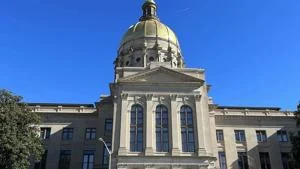
(The Center Square) – The Georgia House of Representatives passed a 2027 fiscal year budget that includes $60 million for school literacy programs and $101 million more than last year for the Department of Corrections.
The revenue estimate of $38.5 billion is $738 million, or 2%, more than the fiscal year 2026 budget, said Rep. Matt Hatchett, R-Dublin, chairman of the House Appropriations Committee.
Passage was 159-4.
The spending plan allocates $31.2 million for literacy coaches at the state’s 1,113 elementary schools, Hatchett said.
Only 38% of Georgia’s third graders are proficient readers, according to data from the Georgia Council on Literacy.
Another $5.5 million will be used to create professional development programs for literacy coaches and elementary school teachers.
“I want to emphasize that we are not simply throwing money at the problem,” Hatchett said. “These investments are built on accomplishments in other states with proven results and I look forward to reading about similar results right here in Georgia.”
An additional $9.7 million would go to the Department of Early Care and Learning for extended-day and pre-kindergarten programs serving 2,448 students, Hatchett said.
The Department of Corrections has struggled with hiring correctional officers for Georgia prisons. Commissioner Tyrone Oliver told lawmakers in December that the state’s prison system still needs 1,000 additional officers to reach optimal staffing levels, but that things are improving.
“We made great strides in improving our correctional officer workforce and this budget provides $34.9 million to continue the hiring trajectory to reduce the inmate to correctional officer ratio to 1 to 12 in FY27 with a goal of 1 to 11 by the FY28 budget cycle,” Hatchett said.
The budget includes $10.98 million for staffing for the Department of Family and Children’s Services. The extra staffing is to help the department reduce its error rate for the federal Supplemental Nutrition Assistance Program.
Georgia’s error rate is 15.65%, third highest in the country, according to the U.S. Department of Agriculture. The state could be forced to pay between $162 million and $487 million a year, according to an analysis by the Georgia Budget and Policy Institute.
House Speaker Jon Burns, R-Newington, said the budget is more than just numbers on a page.
“It represents the House’s dedication to championing Georgia’s students, children, families and communities in every corner of our great state,” Burns said after the vote.
The budget now goes to the Senate for consideration.